
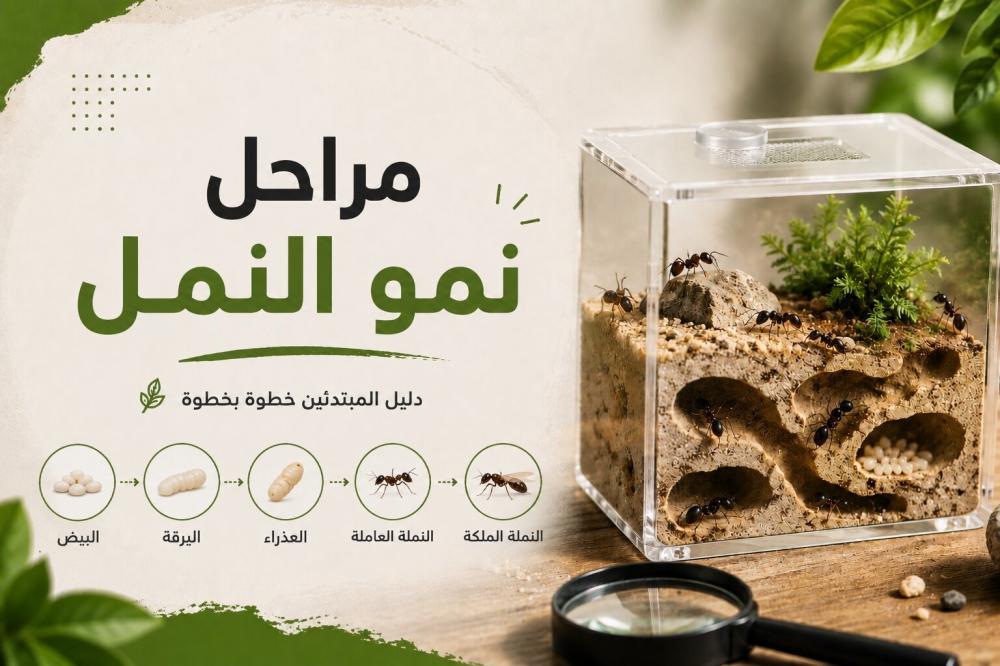
📈 Ant Growth Stages An ant colony goes through several stages before becoming a complete community of workers. Understanding these stages helps you track your colony's growth and know if things are progressing normally.
🥚 Eggs This is the first stage, where the queen lays eggs after settling down.
- They are very small and white in color.
- They are usually gathered in a cluster.
- They need proper humidity to continue developing.
🐛 Larvae After a while, the eggs hatch and turn into larvae.
- They look like tiny worms.
- They don't move much.
- They rely on feeding (protein) to grow.
- This is where the workers' role in feeding them begins.
🟤 Pupae Larvae turn into pupae before becoming adult ants.
- They are enclosed in cocoons (in some species).
- Inside, the ant transforms into its final shape.
- They do not need feeding at this stage.
🐜 Workers The final stage is the emergence of workers (adult ants).
- They start foraging for food.
- They care for the queen and larvae.
- They expand the colony.
💡 The first workers are usually smaller and are sometimes called "nanitics" or "founding workers."
⏳ How long do these stages take? It varies depending on the species and environment, but generally:
- From egg to worker:
- About 3 to 8 weeks.
⚠️ Important Notes
- Slow growth is normal at the beginning.
- Don't worry if you don't see rapid progress.
- Stability is more important than speed.
💡 Tip Observe the stages without interfering. Over time, you will clearly notice an increase in the number of ants.
🐜 Conclusion An ant colony starts with a queen and eggs, then goes through gradual stages until it turns into an active colony. Patience is the most important element in this journey.